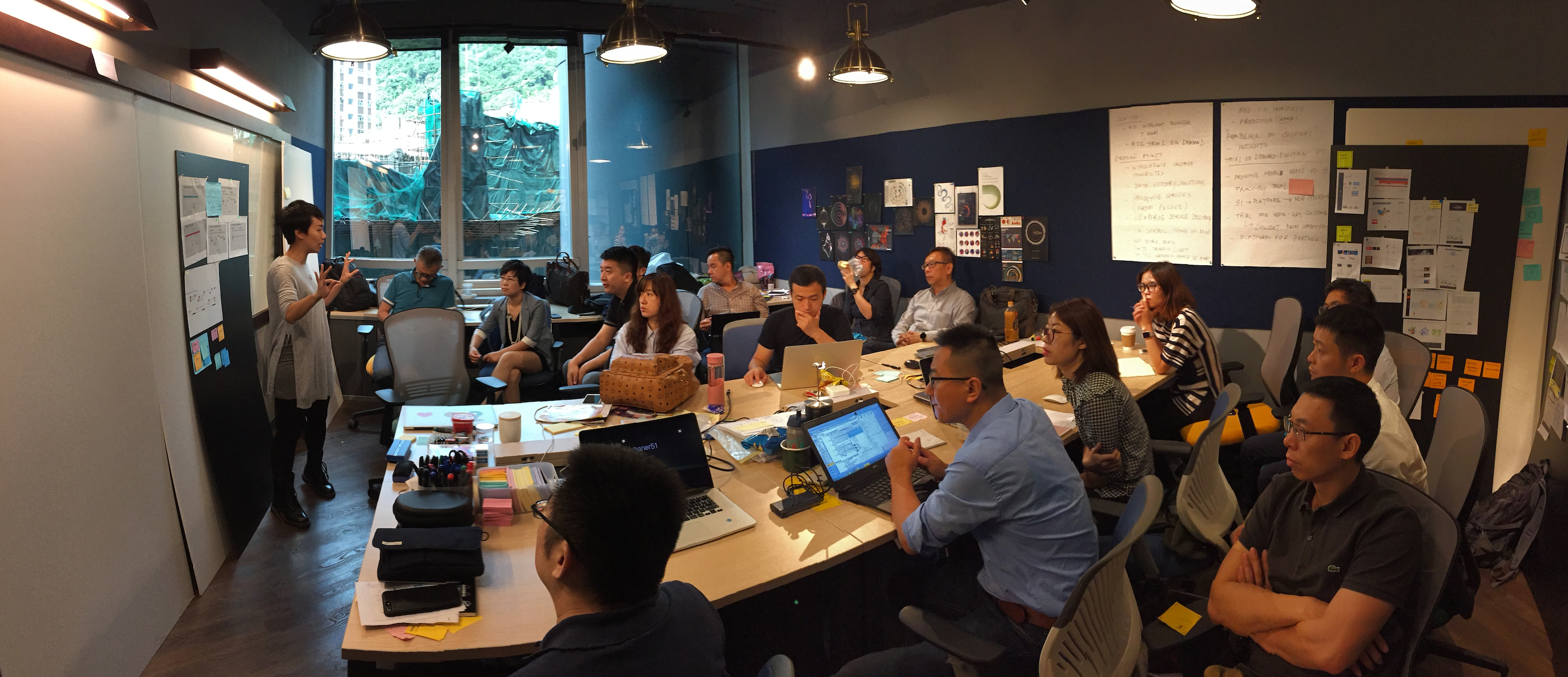
My first exposure to strategic,
cross-cultural design —
and where I learned to see the big picture
before designing the details.
Three years into my career, I had been focused on execution — shipping real products, solving concrete problems.
HKT was different. A joint studio with Huawei, IDEO, and HKT — working in English, across three organisational cultures, on a problem with no obvious answer.
It was the first time I had to think before I could design.
HKT — Hong Kong's largest telecom company, with decades of history and customer data.
The challenge wasn't a lack of assets. It was a lack of digitisation. Historical data was underutilised. Customer relationships were fragmented. Service was passive, not intelligent.
Three questions drove the project:
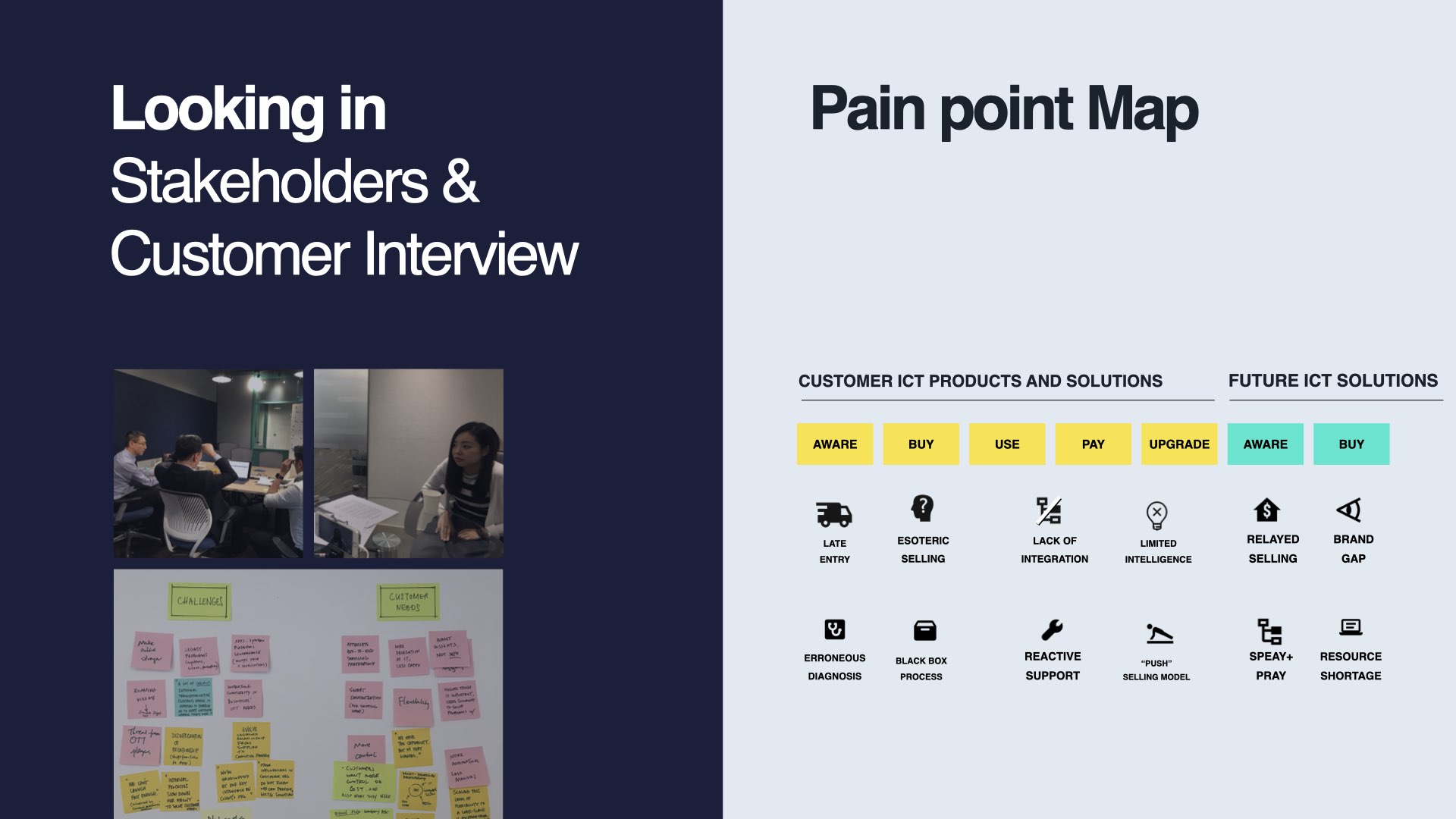
This wasn't a typical project.
Huawei, IDEO, and HKT came together in a cross-functional studio — designers, marketers, developers, and HKT stakeholders, working as one team.
IDEO brought their design thinking methodology. HKT brought their domain knowledge. Huawei brought technology capability.
Working in English, across three very different organisational cultures, on a problem that had no brief — only a direction.
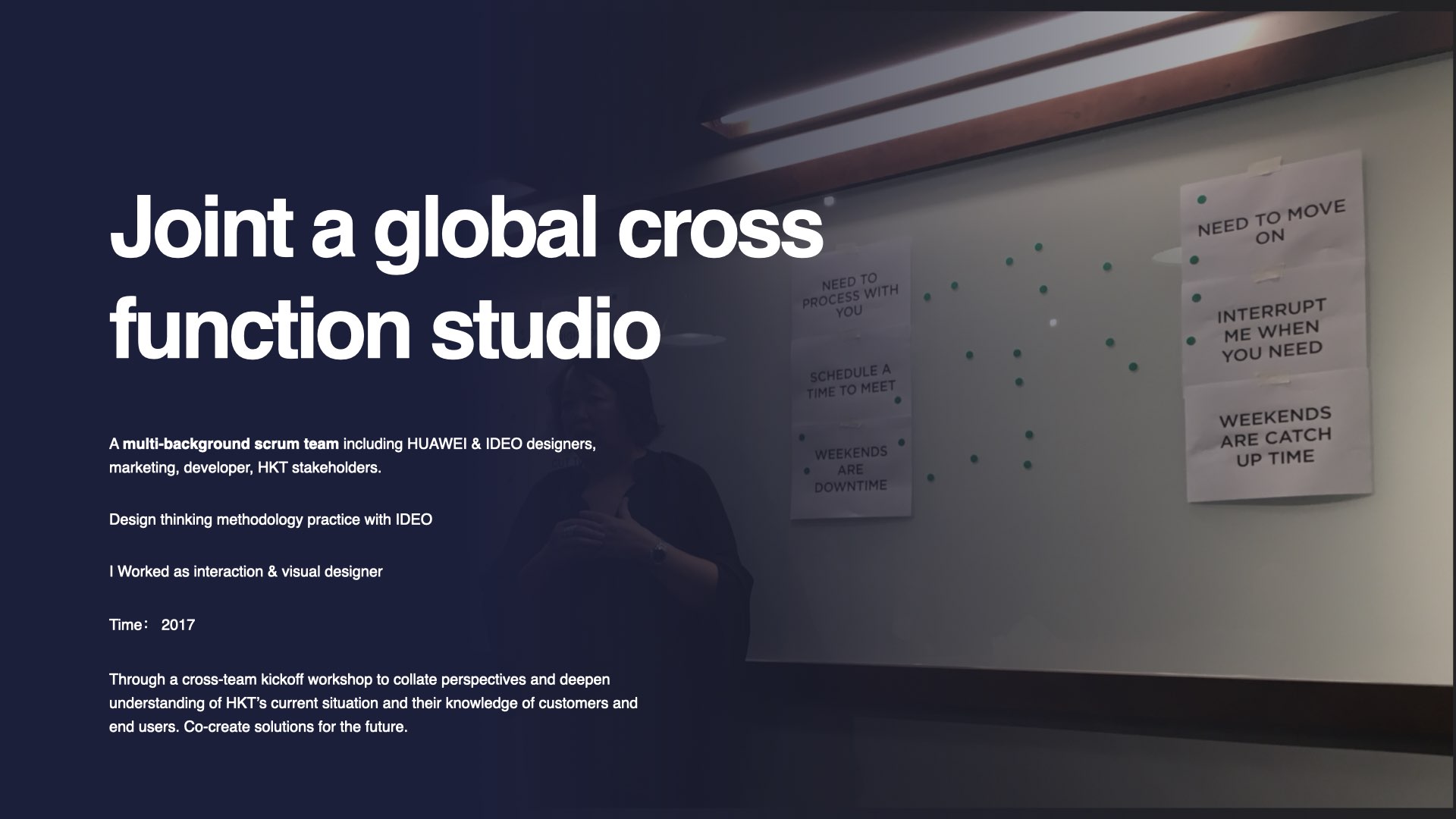
The first phase was deliberately messy. Stakeholder interviews. Customer research. Pain point mapping. Journey workshops.
The goal wasn't to find answers quickly. It was to make sure we were asking the right questions.
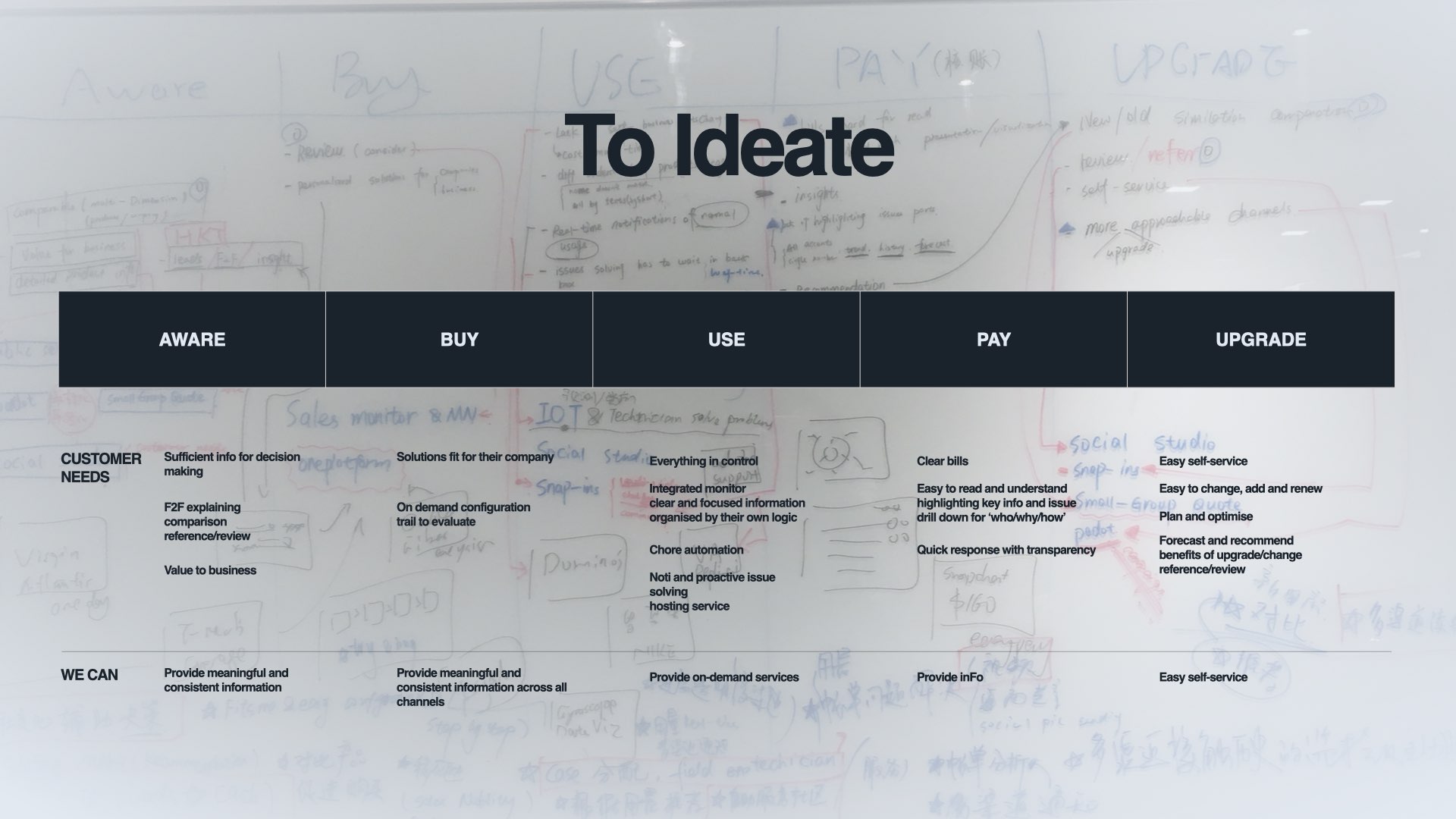
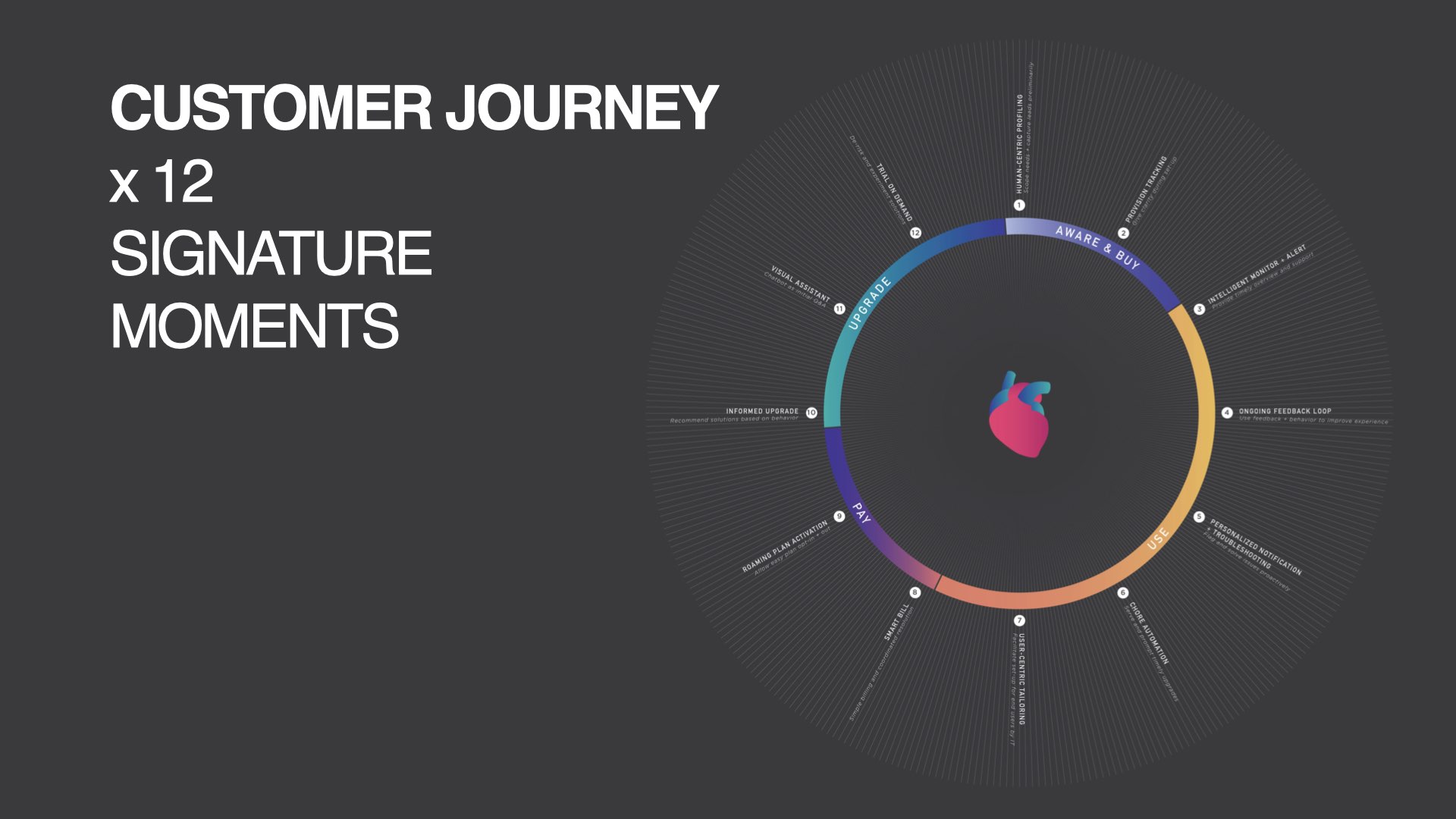
From the full customer journey — Aware → Buy → Use → Pay → Upgrade — we identified 12 Signature Moments: the points where HKT could make the biggest difference.
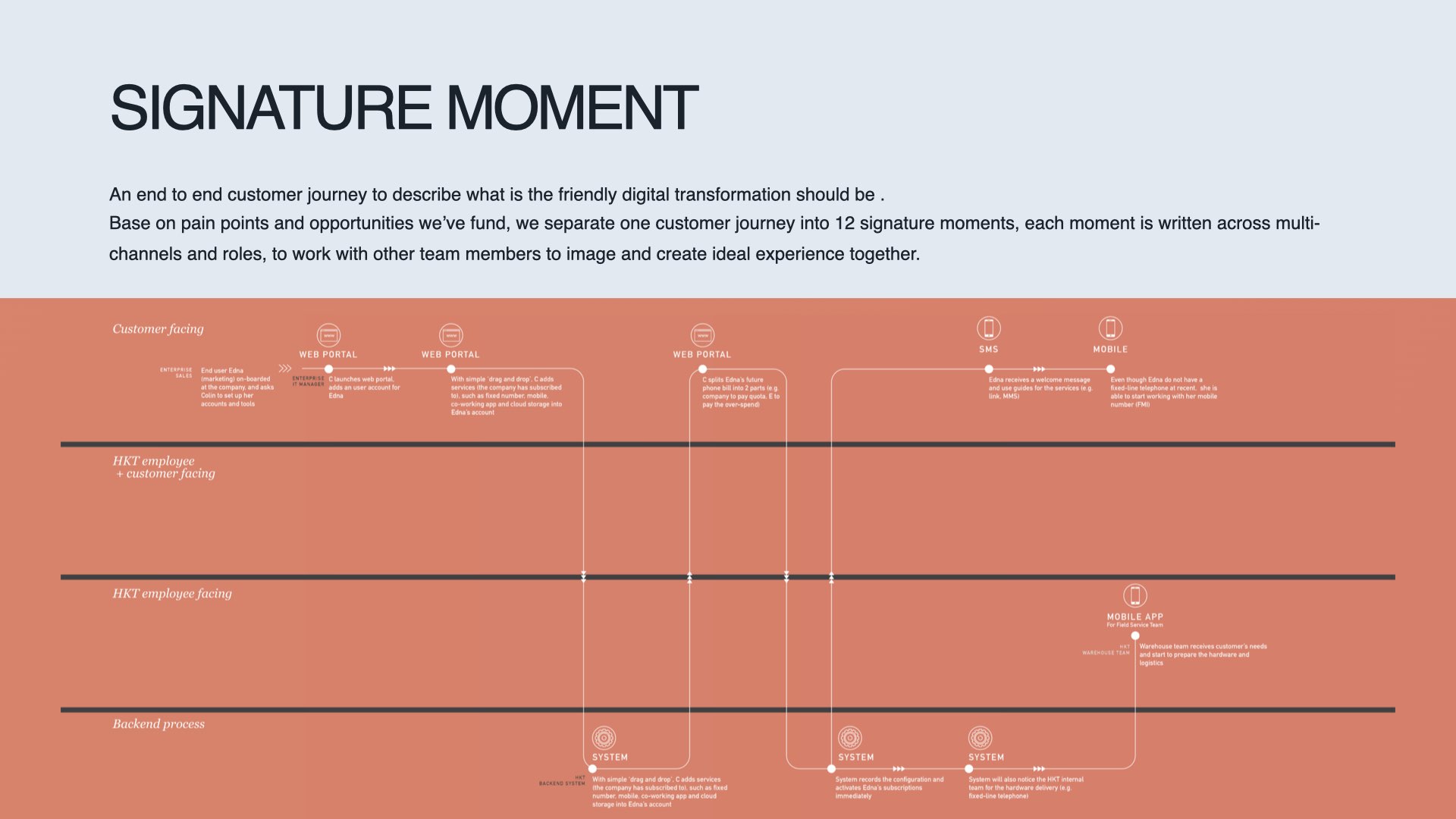
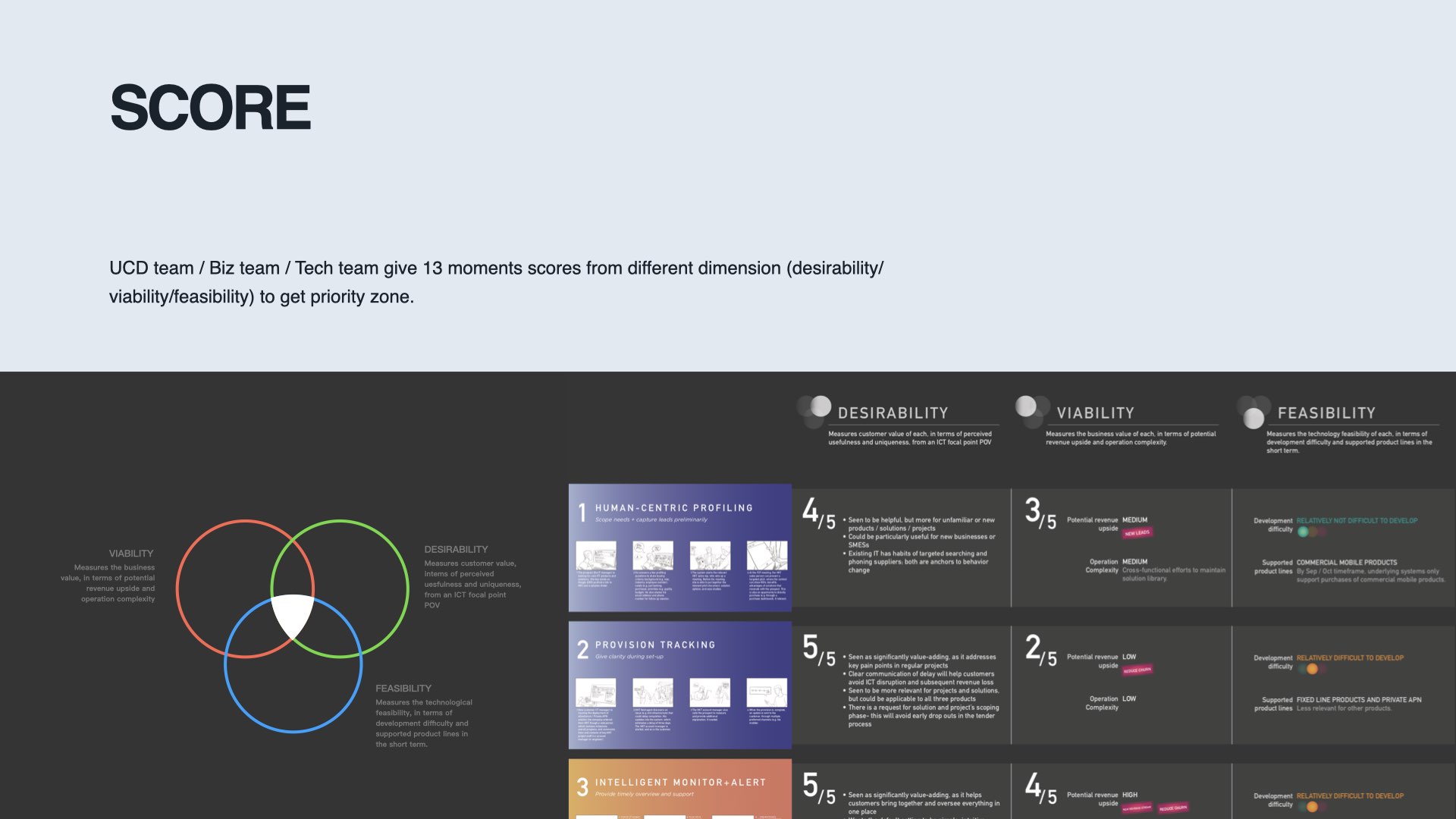
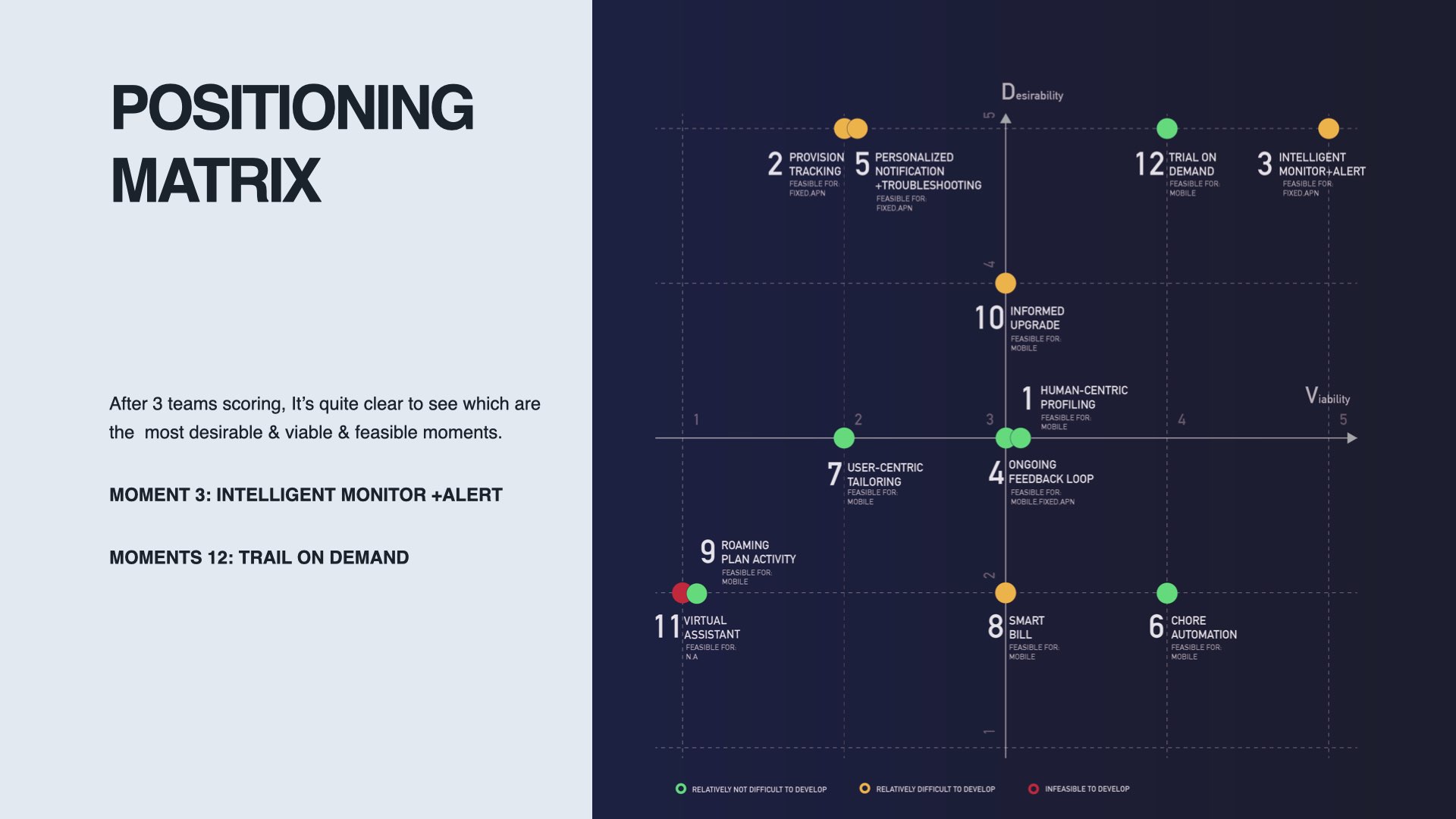
Twelve moments. Limited resources. Three teams — UCD, Business, Technology — each scoring every moment across Desirability, Viability, and Feasibility.
The process wasn't comfortable. Every team had different priorities. Alignment took time.
But the scoring made the decision clear:
These became the focus.
With direction established, the work shifted to making it real.
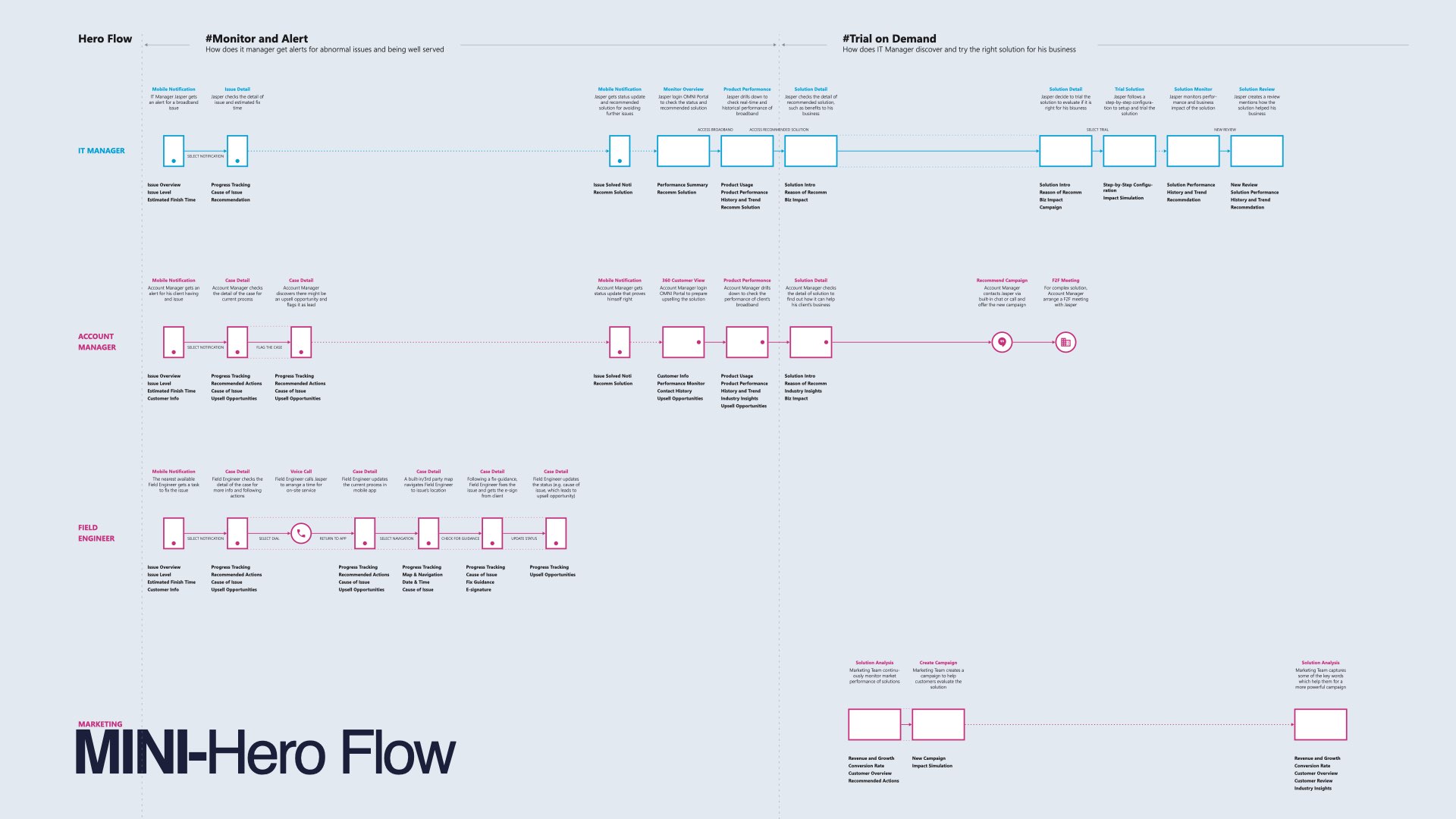
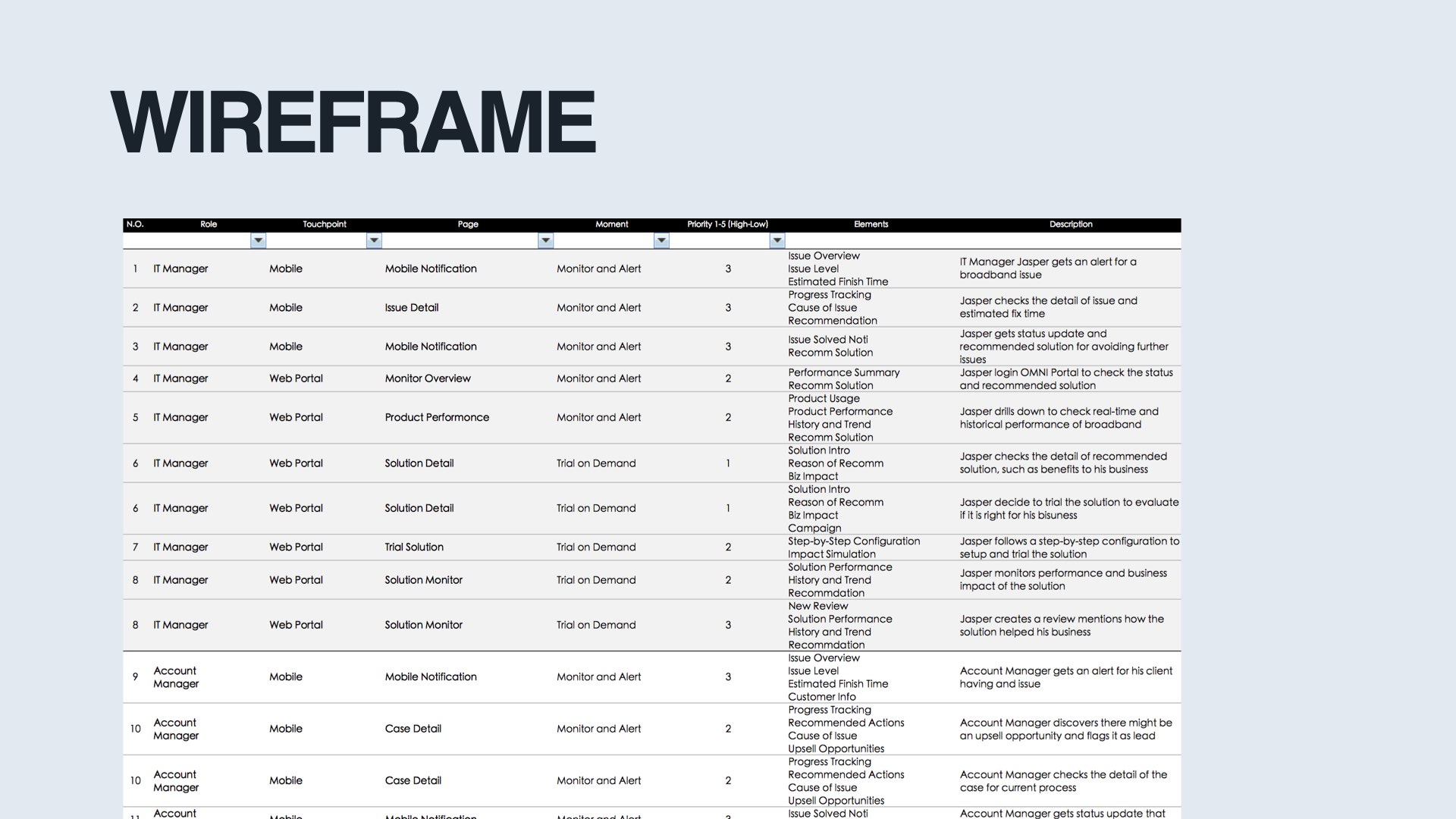
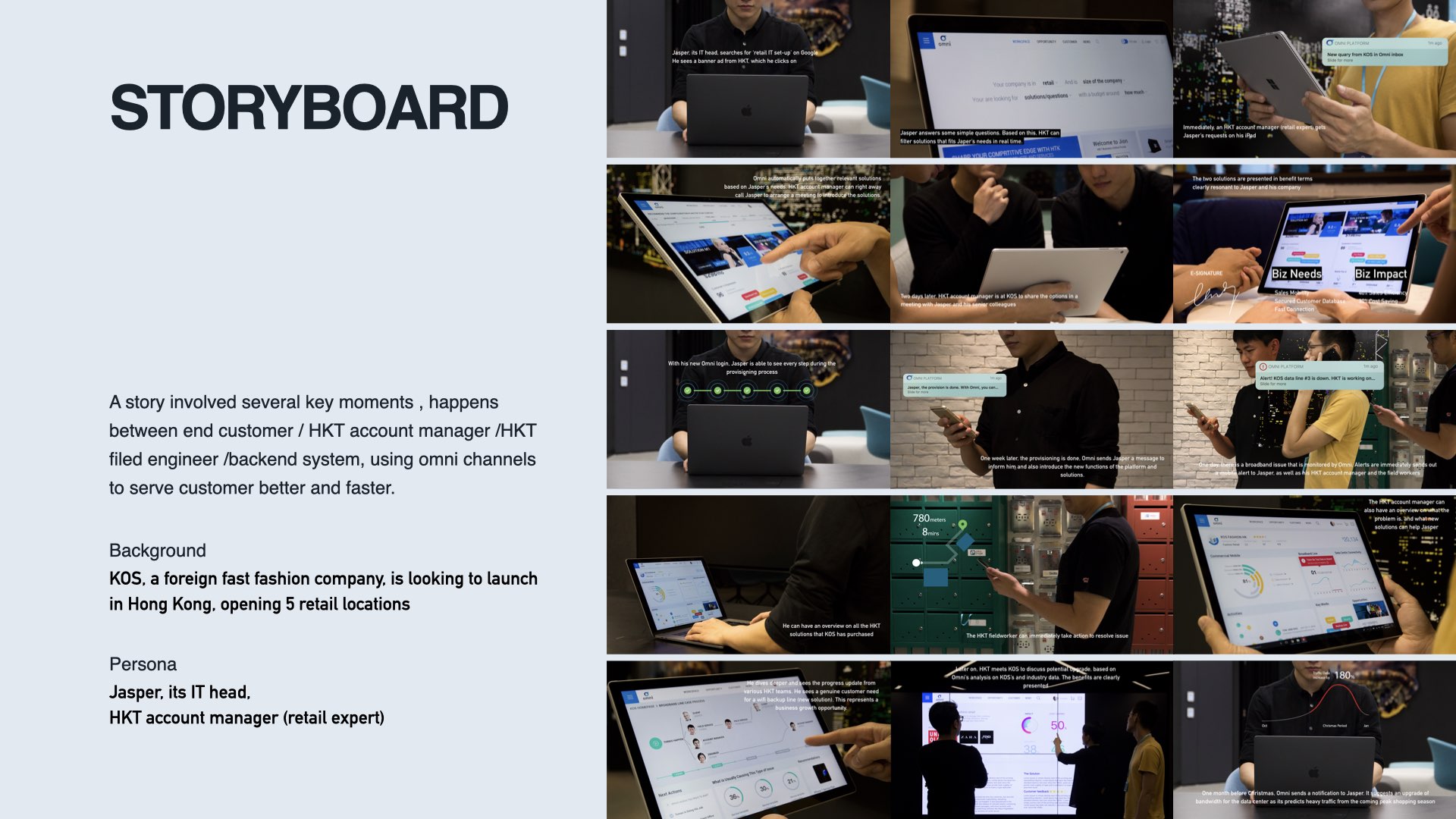
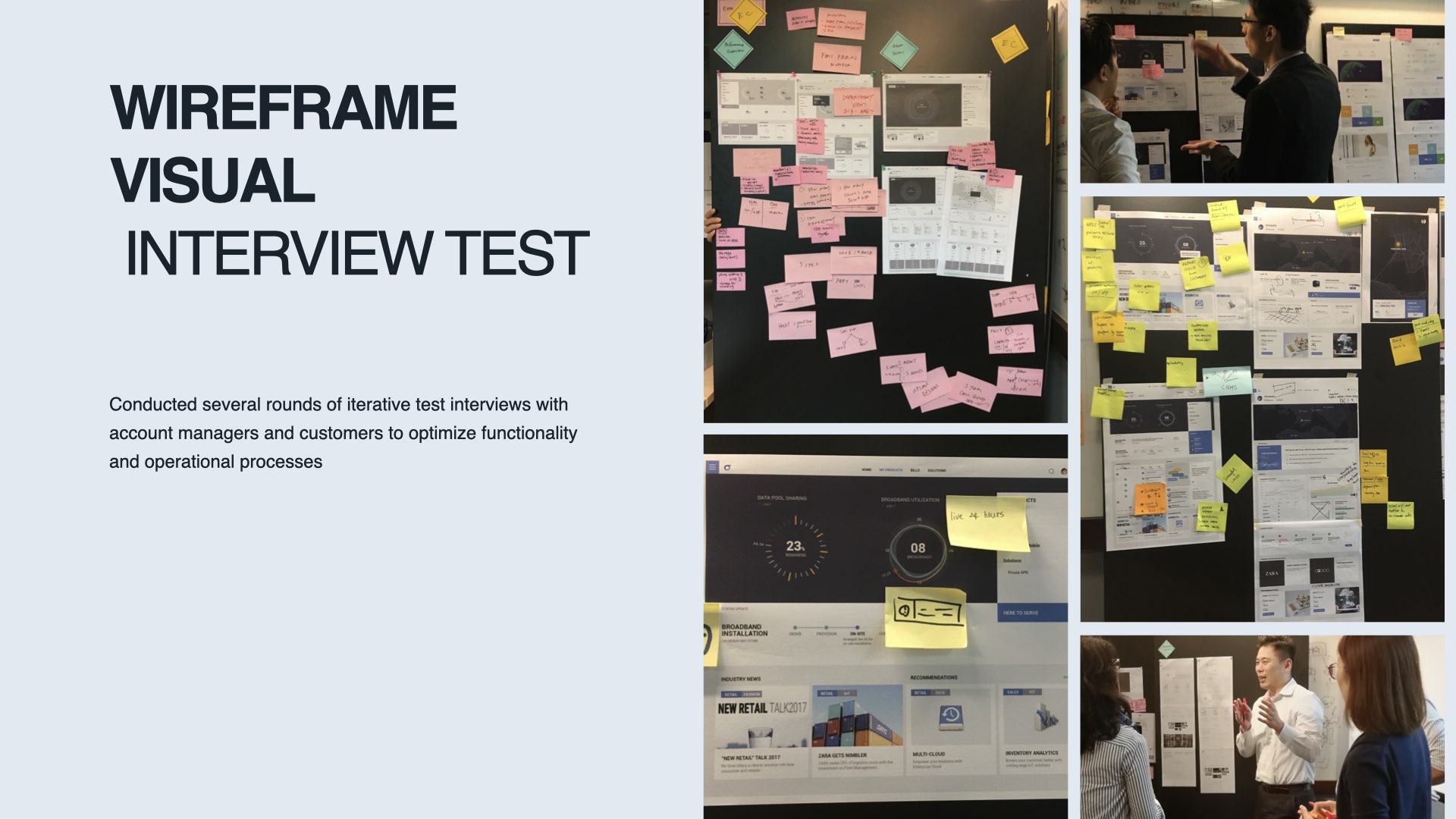
Storyboards brought the service to life — showing how account managers, IT managers, field engineers, and customers would experience the new platform together.
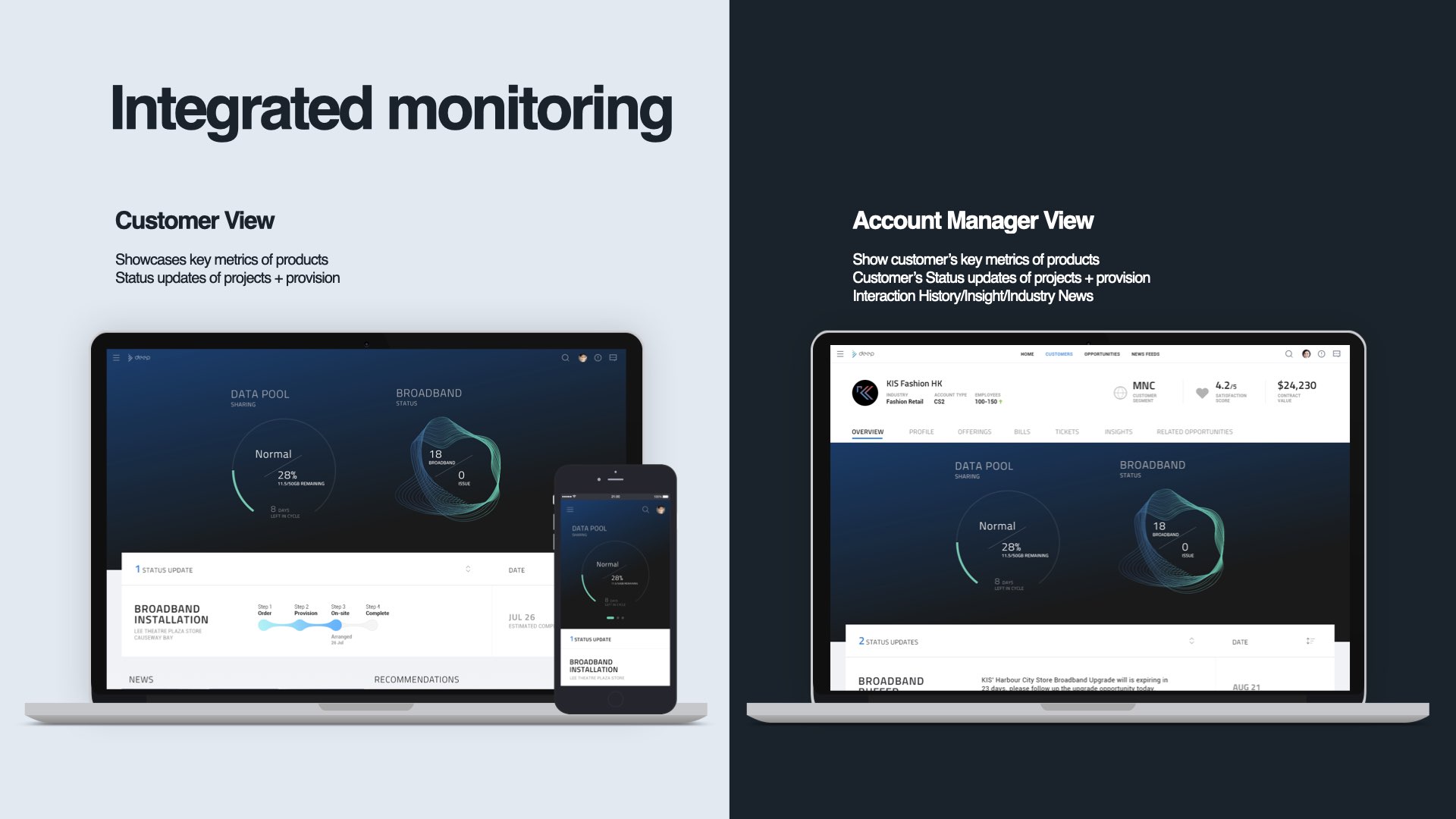
Hero UI translated the vision into interfaces — Customer View and Account Manager View — each designed around a different set of needs.
Before HKT, I knew how to execute. I could ship products, solve concrete problems, work within a defined brief.
HKT taught me something different: how to navigate ambiguity. How to synthesise complexity across cultures and disciplines. How to make a high-level concept proposal that people with very different backgrounds could all believe in.
It was my first experience of seeing the big picture before designing the details.
Six months later, I was Design Lead for Huawei Gallery — 220 million users, competing proposals, no obvious answer.
For the first time, I knew how to navigate that.